
The Financial Services Regulatory Authority (FSRA) of Abu Dhabi Global Market (ADGM) has published Consultation Paper No. 12 of 2025, proposing significant enhancement to its fund’s framework. These changes offer particular relevance for external asset managers, fund managers, and private banking institutions considering ADGM as a jurisdiction for fund structuring and management operations. The consultation closes on January 30, 2026, providing market participants a limited window to shape the final framework.

The Money Laundering Reporting Officer represents one of the most critical compliance functions in financial services firms operating within the DIFC and ADGM. As regulatory expectations intensify and financial crime risks evolve, the MLRO role has expanded significantly beyond basic suspicious transaction reporting. For wealth management firms, asset managers, fund managers, and private banking institutions, understanding the full scope of MLRO responsibilities has become essential to maintaining regulatory compliance and managing operational risk.

The Financial Services Regulatory Authority of ADGM implemented a comprehensive cyber risk management framework effective January 31, 2026, following extensive industry consultation. This framework establishes mandatory requirements for authorized persons and recognized bodies operating in Abu Dhabi Global Market. For wealth management firms, asset managers, fund managers, and private banking institutions, understanding and implementing these requirements represents a critical compliance priority with significant operational implications.

The landscape for stablecoins and fiat-referenced tokens in the UAE's premier financial centers has transformed dramatically throughout 2025. Both ADGM and DIFC have implemented comprehensive regulatory frameworks governing these digital assets, creating significant opportunities and compliance obligations for wealth managers, private banks, and External Asset Managers. Understanding these parallel yet distinct regulatory approaches is essential for firms seeking to incorporate stablecoins into client portfolios and treasury operations.

Financial services firms operating in the DIFC continue to face evolving expectations around suitability assessments. Recent regulatory communications have reinforced the importance of robust frameworks that ensure financial products and services align appropriately with client needs. For wealth management companies, asset managers, private banking institutions, and financial advisory firms, understanding and implementing effective suitability processes represents both a regulatory obligation and a business imperative.
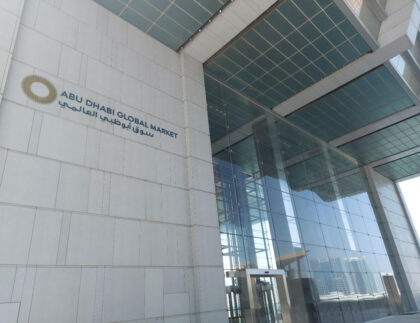
Abu Dhabi Global Market's Financial Services Regulatory Authority has published sweeping proposals to enhance its funds framework, with particular implications for External Asset Managers, private banking institutions, and family offices operating within this rapidly growing financial center. These developments represent the FSRA's commitment to maintaining proportionate regulation while supporting ADGM's evolution as a premier global fund management hub.

The regulatory landscape for wealth management firms, External Asset Managers, and private banks operating within the DIFC and ADGM has evolved significantly throughout 2025, with both the DFSA and FSRA placing heightened emphasis on internal control frameworks and audit effectiveness.

On 15 December 2025, Dubai Financial Service Authority (DFSA) issued updated rules on the regulation of Crypto Token in Dubai International Financial Centre (DIFC). The rules were updated post the consultation period outlined in Consultation Paper No. 168 which enumerated the proposed legislative changes to these regulations.

The Dubai Financial Services Authority (DFSA), the independent regulator of the Dubai International Financial Centre (DIFC) conducted its second Artificial Intelligence (AI) survey in 2025, following its inaugural study in 2024, This report showcases its findings with comparative insights from the 2024 edition.
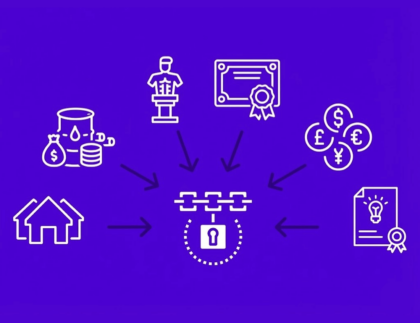
Asset tokenization has emerged as one of the most significant developments in global finance. By converting real-world assets into digital tokens on a secure distributed ledger, tokenization creates new pathways for ownership, participation, and liquidity. This concept is gaining traction not only in technology circles but also among private banks, family offices, external asset managers (EAMs), and wealth-management firms seeking more flexible investment structures.
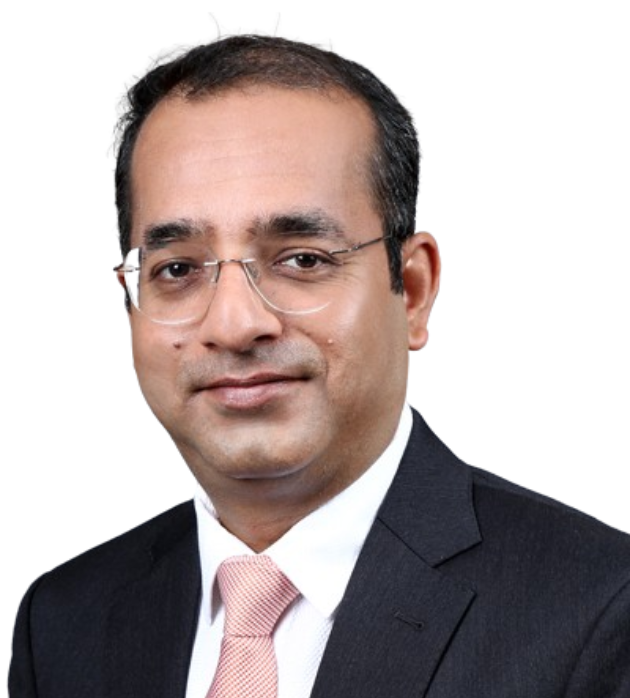 Zubin Muriya is a seasoned Governance, Risk, and Compliance (GRC) professional with over two decades of cross-jurisdictional experience in banking regulatory compliance, financial crime risk management, corporate governance framework, and audit advisory. His work across India and the GCC (UAE, Qatar, Bahrain) reflects a career rooted in regulatory rigor and operational integrity.