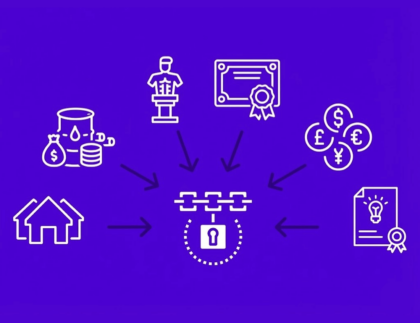
Asset tokenization has emerged as one of the most significant developments in global finance. By converting real-world assets into digital tokens on a secure distributed ledger, tokenization creates new pathways for ownership, participation, and liquidity. This concept is gaining traction not only in technology circles but also among private banks, family offices, external asset managers (EAMs), and wealth-management firms seeking more flexible investment structures.

The Securities and Commodities Authority (SCA), the United Arab Emirates’ regulator overseeing securities, commodities, and financial markets, and the Dubai Financial Services Authority (DFSA), the independent regulator of the Dubai International Financial Centre (DIFC), recently announced a Memorandum of Understanding (MoU) aimed at enhancing audit oversight and fostering greater regulatory cooperation between the two organisations.

Dubai continues to advance its position as the Middle East, Africa and South Asia’s (MEASA) leading global financial centre with the DIFC surpassing 8,000 active registered companies, including over 1,000 entities being regulated by the Dubai Financial Services Authority (DFSA), the Centre’s independent regulator. Additionally, the DIFC Courts has recorded over AED 17.5bn in total case values so far this year.
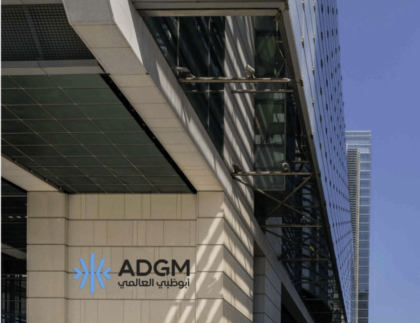
Abu Dhabi Global Market (ADGM) has reinforced its position as the largest and fastest-growing international financial centre (IFC) in the Middle East and North Africa (MENA) region, marking a record-breaking first half of 2025. With over 11,000 active licences and a significant rise in assets under management (AUM), ADGM continues to strengthen Abu Dhabi’s role as a global financial and investment hub.

In the fast-evolving financial landscape of the UAE, where technology drives efficiency and regulation ensure trust, the importance of having the right IT infrastructure cannot be overstated. For regulated entities operating within DIFC (Dubai International Financial Centre) and ADGM (Abu Dhabi Global Market), technology is not just an enabler, it is the foundation upon which compliance, client trust, and business continuity rest.

The Dubai International Financial Centre (DIFC) has taken another step forward in strengthening its Data Protection framework. On 1 September 2023, DIFC introduced Regulation 10 under the DIFC Data Protection Regulations, supplementing the DIFC Data Protection Law No. 5 of 2020.

The Dubai International Financial Centre (DIFC), the leading global financial hub for the Middle East, Africa, and South Asia (MEASA), has released the fourth edition of its Future of Finance Report series, titled Shift to Private Capital. The report explores how the rapid growth and globalisation of private wealth are transforming financial markets while strengthening Dubai’s position as a prime destination for high-net-worth individuals, family offices, and private capital investors.

The global rise of digital assets has brought both opportunity and risk. Regulators across the world are grappling with how to encourage innovation while protecting investors and financial markets.
In Dubai, the Dubai Financial Services Authority (DFSA) has created one of the most comprehensive digital asset regimes through its Crypto Token framework, introduced in 2022 and refined since. This framework applies to businesses operating in or from the Dubai International Financial Centre (DIFC), one of the world’s most prominent financial hubs.

Every DFSA-regulated firm is required to submit its Annual AML Return in line with AML Rule 14.5.1. The Return provides regulators with an overview of a firm’s AML framework, customer activity, and control effectiveness. Below is a concise summary of the main points from the 2025 FAQ.

Proprietary Investment Companies, often referred to as “prop trading/Investment firms,” are businesses that trade financial instruments, such as equities, bonds, derivatives, or other securities, in capital markets using their own funds rather than client money. This specific type of firm earns profits and bears losses directly from its own investments. No third-party client money is involved. If the company only trades its own funds and does not offer financial services to others, it is a non-regulated entity.
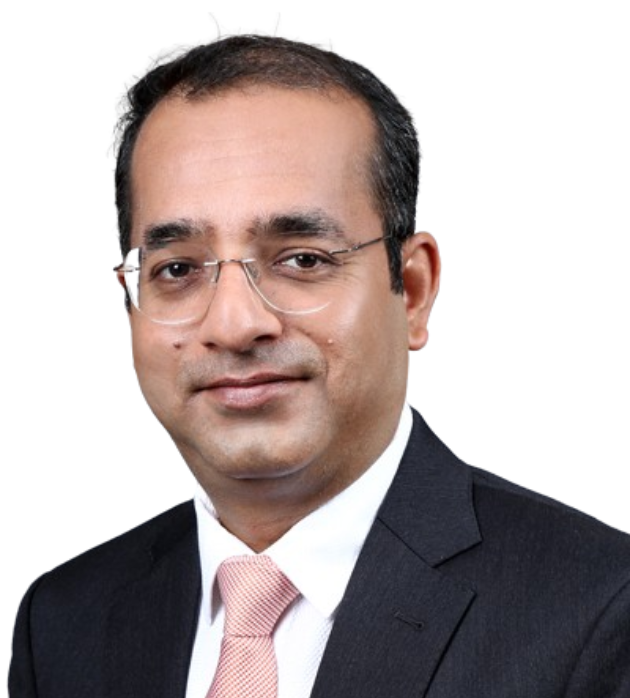 Zubin Muriya is a seasoned Governance, Risk, and Compliance (GRC) professional with over two decades of cross-jurisdictional experience in banking regulatory compliance, financial crime risk management, corporate governance framework, and audit advisory. His work across India and the GCC (UAE, Qatar, Bahrain) reflects a career rooted in regulatory rigor and operational integrity.